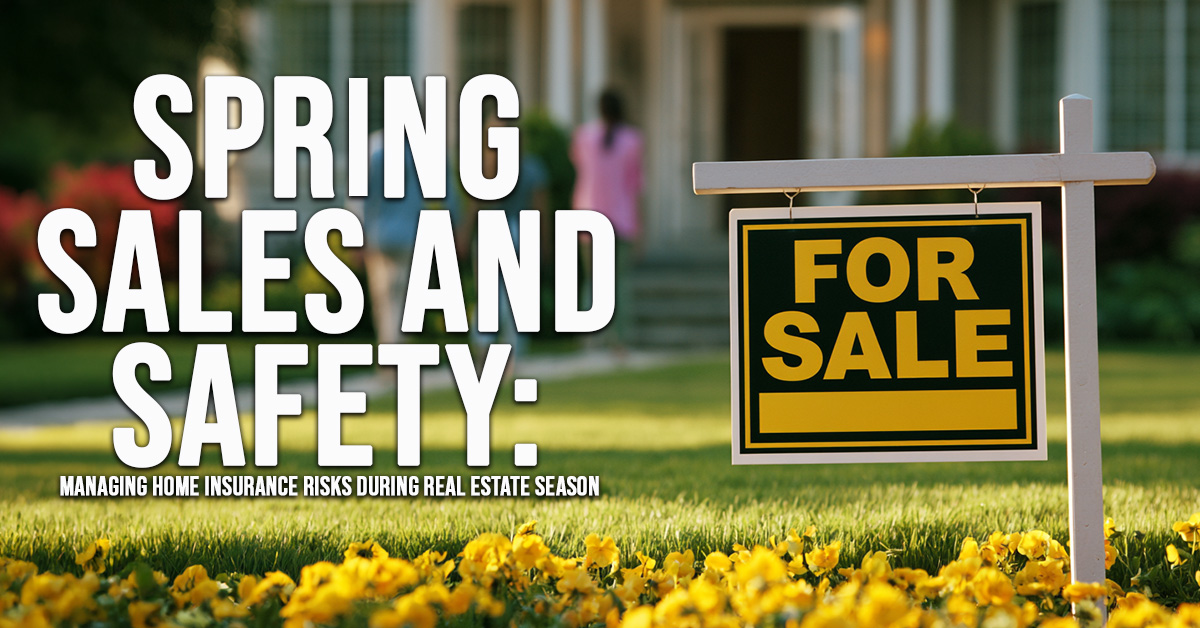
Spring Sales and Safety: Managing Home Insurance Risks During Real Estate Season
The third week of May is traditionally the “Sweet Spot” for the real estate market. The weather is perfect for curb appeal, and families are looking to close before the new school year starts. If you have your home on the market this week, your Homeowners Insurance is doing a lot more heavy lifting than you might realize.
- The Open House “Trip and Fall”
When you open your home to dozens of strangers, you are essentially inviting Personal Liability risk through your front door. A loose rug on a hardwood floor or a slightly uneven stepping stone in the garden becomes a major hazard when people are distracted by looking at your crown molding.
- The Coverage: Your policy’s “Medical Payments to Others” will cover minor injuries if someone slips, but if a serious injury occurs, your “Liability” limit (usually $$300,000$ to $$500,000$) is what protects your assets from a lawsuit. Ensure these limits are high enough before the first “Open House” sign goes up.
- The “Vacancy” Trap
Are you selling a home you’ve already moved out of? This is a critical insurance “Red Zone.” Most standard policies have a Vacancy Clause. If a home is empty for more than 30 or 60 days, certain coverages—like Vandalism or Water Damage—may be automatically suspended. If a pipe bursts in an empty house, you could be facing a total loss with zero coverage.
- The Fix: If the house is empty, call your agent to add a “Vacancy Permit” or “Unoccupied Home” endorsement. It’s a small cost for massive peace of mind.
- Protecting the “Staging”
In 2026, professional staging is the norm. If you have rented $$20,000$ worth of high-end furniture to make your home look like a magazine, who is responsible if it’s damaged? Generally, your home insurance covers your owned contents. You may need a specific rider or an agreement with the staging company to ensure their property is covered while it’s under your roof.
Selling a home is stressful enough; don’t let a “silent” insurance gap add to the burden. Double-check your policy this week so you can focus on the “Sold” sign.